In my earlier post after OFC in Los Angeles I mused on a confluence of photonics and AI trends, noting the then-new OpenClaw sensation that coincided with that influential conference:
It also illustrated something fundamental but underplayed about the AI phenomenon: there is broad, unmet demand for local, focused, task-oriented AI functionality. Local as in running on your machine or a server on your office LAN. Local as in “at the edge.”
What I didn’t mention was that Aikidovation™ is an actual case study for that premise.
Challenge: AI That Stays In The Office
I grin when I say, “Aikidovation begins with AI,” but it is literally the case: A foundational architectural element for Aikidovation as a business is 100% local, offline-capable, entirely confidential, impressively powerful AI tooling.
And it’s now up and running.
It was originally targeted for confidential research and Skunkworks as a Service projects, and to underpin some new solutions for photonic alignment automation. But, as I detail below, it is proving to have surprisingly broad value to clients, especially in situations sensitive to disclosure.
Local, Not Low-Cal
Having the tool run locally means no disclosure of any background documents or information, or even of the query (or prompt, in AI lexicon). Nothing is exposed to the Internet. Really, nobody can see what we’re up to when using this tool. Even its web queries—which only occur when requested by the user—are obfuscated by using a meta-search approach that queries multiple search engines in parallel.
This all took a bit of doing, and it necessitated some delectably high-end Apple hardware. But mostly, it leverages the emerging ecosystem of open-weight models, frameworks, agents, tools and skills that are effervescing into practicality as the market and technology continue their breakneck evolution.
Nothing To See Here
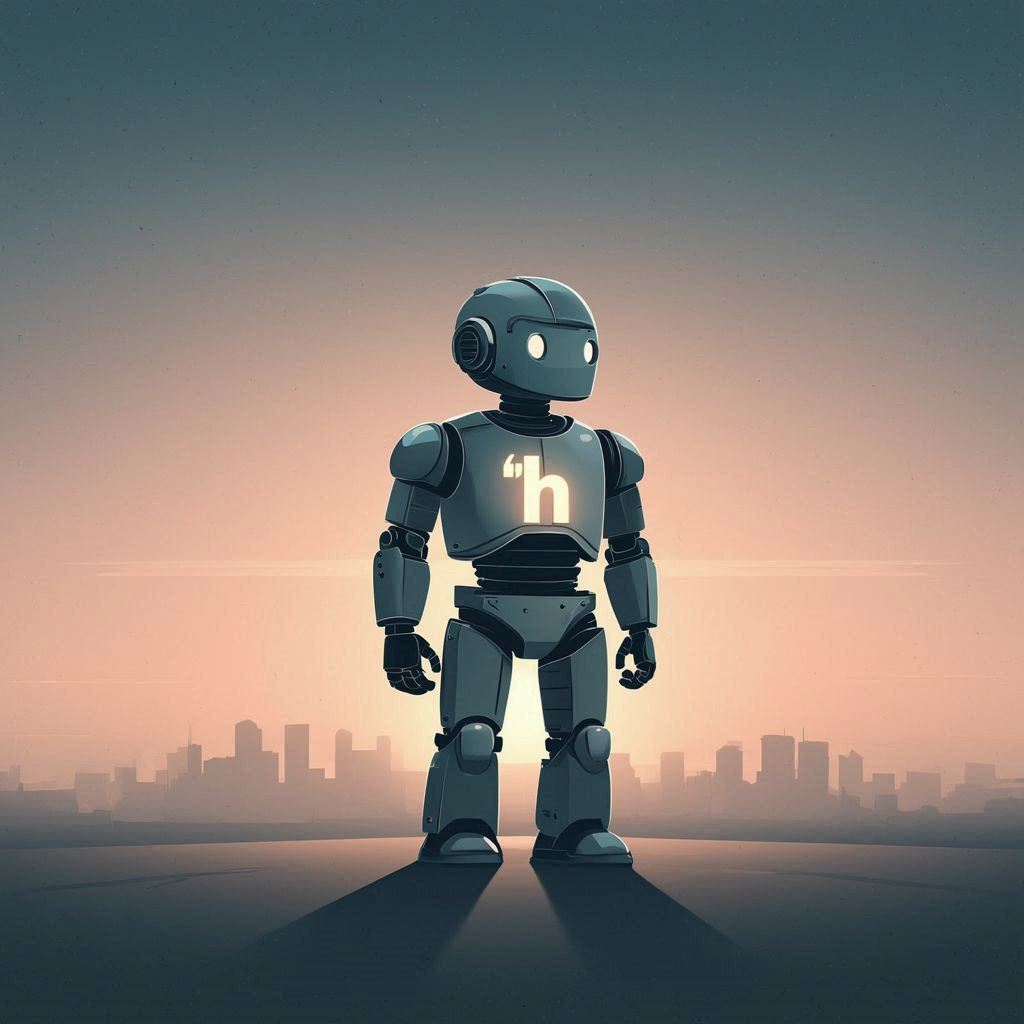
Aikidovation’s custom-built AI (which Mel Brooks fans will approvingly note is named “Hymie”) went live about ten days ago as I write. In that time, it has served well at astonishingly diverse tasks:
- Deep dives into technical, business, strategic, competitive and financial analyses of topics and companies of interest.
- Patent review. In one example, when fed a draft patent application—by definition a highly sensitive and confidential document—it produced four pages of insightful and well-formatted technical and strategic commentary that complemented the usual human review. In another example, it reviewed issued patents, devising some clever possible work-arounds.
- Programming. In one case, a client’s customer requested an example automation program to use the client’s machine in a specified photonic process. After feeding the user manuals into the client’s dedicated workspace, it generated a Python program with documentation. Asked to do the same in C#, it did so in seconds. Asked to do it again in French in C++, it did so again, this time with documentation en français. In another example, it programmed an easy-to-use GUI for the client’s machine. In a third example, it generated a multi-threaded Python utility that leveraged real-time scripting capabilities of that client’s device. All confidentially, with no disclosure of potentially sensitive technical documentation.
- Deep due-diligence analyses. These have included preliminary reviews of contracts, and heavy inspection of a business opportunity that seemed too good to be true… and was.
We’ve Watched This Movie Before
There is a lot of free-floating angst out there that AI will mean less employment. Well, it certainly is disruptive, and it certainly will alter many jobs and, yes, it will certainly eliminate some. But to my eye it is already acting more as a work-accelerant than a work-eliminator. In this, it is identical to previous disruptive technological advancements throughout history. Work evolves, productivity upshifts, society benefits.
After all, we used to scrabble on our hands and knees to dig stuff up, then someone invented the shovel, then came the backhoe, and then came the grader. Each meant a shift in employment, a change of the established way things are done.
Disruption.
Smarter workers saw what was happening …and learned to drive the grader.
Beyond The Shovel
When you aim to catalyze innovation as I’m doing here with Aikidovation, focusing on the aikido part of the name helps. Aikido is all about leveraging a challenge to your advantage.
AI is a challenge, for sure. Learn to drive it.